We've learned that small businesses rarely stumble because of a single bad decision—it's the subtle financial signals that go unnoticed until they snowball into crisis. If you're questioning whether you've reached that turning point, you’re already ahead of most founders we meet.
Based on years of working inside growing companies, we’ve identified the five early warning signs that consistently appear before cash flow tightens, margins erode, or growth stalls. These aren’t generic red flags—they’re patterns we’ve seen firsthand across industries, from lean startups to multi-location small businesses.
In this guide, we explain what these signals truly mean, why they surface, and how a fractional CFO can step in early to stabilize finances and keep your growth on track. If you want insights grounded in real operational experience rather than theory, you’re exactly where you need to be.
Quick Answers
Fractional CFO
A Fractional CFO provides part-time executive-level financial leadership for small businesses that have outgrown basic bookkeeping but don’t yet need—or can’t justify—a full-time CFO. They bring structure, forecasting, and decision-ready insights. At Accountix Solutions, we’ve seen this model deliver fast wins: clearer numbers, stabilized cash flow, and strategic guidance that Improves Financial performance and helps founders make confident, data-backed moves without the full-time cost.
Top Takeaways
Fractional CFOs fill financial strategy gaps.
Early structure prevents costly mistakes.
Strong data systems drive better decisions.
You get senior expertise without full-time cost.
A quick assessment reveals fast wins.
1. Cash Flow Feels Unpredictable—Even When Revenue Looks Strong
When sales keep growing but liquidity remains tight, it’s a sign that something deeper is off—usually a mismatch between billing cycles, expenses, and capital allocation. At Accountix Solutions, we often find that businesses in this stage don’t have a true cash flow model, which leads to surprise shortages and reactive decision-making. A fractional CFO brings structure, forecasting, and control.
2. You’re Making Decisions Without Reliable Financial Data
If you’re relying on gut instinct because your reports come in late, incomplete, or confusing, you’re operating with blind spots. In our experience, this is one of the biggest risk factors for stalled growth. A fractional CFO upgrades your financial visibility by building dashboards, reporting systems, and analytics that clarify what’s working—and what’s not.
3. Margins Are Shrinking but You Can’t Pinpoint Why
Founders typically notice margin erosion after profitability declines. The underlying causes—pricing misalignment, rising input costs, operational inefficiencies—require deeper financial analysis than most early-stage teams have. A fractional CFO identifies the root drivers and helps implement fixes before the problem compounds.
4. Growth Is Increasing, but Your Financial Systems Aren’t Keeping Up
Rapid growth exposes outdated processes quickly. Whether it’s inconsistent bookkeeping, manual invoicing, or scattered financial workflows, scaling without a roadmap creates operational bottlenecks. We frequently step in to upgrade these systems, build financial infrastructure, and ensure growth doesn’t outpace control.
5. You’re Considering a Big Move—But Can’t Model the Impact
Hiring key staff, opening a new location, raising capital, or launching a new product all require financial modeling. Without it, decisions feel like calculated guesses. A fractional CFO provides scenario planning, risk analysis, and clear projections so you can make major moves confidently and strategically, supported by accounting services for nonprofits that enhance financial structure and reporting accuracy.
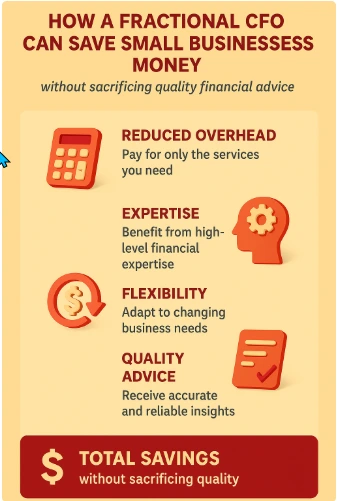
Essential Resources to Make a Confident, Well-Informed Fractional CFO Decision
When business owners reach the stage where financial complexity begins to exceed what their current systems can handle, the right guidance becomes essential for making the next move with confidence. These are the seven resources we at Accountix Solutions consistently recommend to founders who want to evaluate whether a fractional CFO is the right step for their growth—insights grounded in real operational experience and especially valuable for those exploring outsourced accounting services as part of a stronger financial foundation.
1. NerdWallet — A Straightforward Starting Point for Understanding the Role
A clean, no-nonsense breakdown of what a fractional CFO does and when businesses typically bring one on. Ideal if you want a quick, trustworthy foundation before diving deeper.
Source: https://www.nerdwallet.com/article/small-business/fractional-cfo
2. Tipalti — Clear Guidance on What Fractional CFO Services Actually Include
Provides a practical explanation of the responsibilities, scope, and engagement models. Helpful for comparing options and understanding how fractional differs from interim or part-time CFO support.
Source: https://tipalti.com/resources/learn/fractional-cfo/
3. AccountingProfessor.org — A Technical Look at Why SMEs Benefit Most
A deeper, more analytical resource that aligns with the challenges we see across small and midsize companies. Perfect if you want to understand the underlying financial mechanics—not just surface-level benefits.
Source: https://accountingprofessor.org/fractional-cfo-services-why-does-every-sme-need-a-fractional-cfo/
4. Forbes — The Strategic Value of CFO Expertise Without the Long-Term Hire
An objective, third-party perspective on why more businesses are choosing fractional leadership. Reinforces that high-level financial experience doesn’t have to come with full-time overhead.
5. GoFractional — Real Examples of the Problems a Fractional CFO Can Solve
Covers the day-to-day challenges we frequently resolve—cash flow issues, reporting gaps, margin confusion, and more. A helpful way to compare your current struggles against common real-world cases.
Source: https://www.gofractional.com/blog/fractional-cfo
6. Madras Accountancy — A Comprehensive Guide for Growth-Focused Teams
Excellent for companies preparing to scale. Walks through the systems, models, and financial infrastructure needed when growth accelerates faster than operations can support.
7. Phoenix Strategy Group — A Quick Diagnostic to See If You Need Help Now
A simple, relatable checklist of warning signs—useful if you want a fast “should we bring in help right now?” signal.
Source: https://www.phoenixstrategy.group/blog/8-signs-your-business-needs-a-fractional-cfo
Supporting Statistics
1. Financial clarity accelerates sustainable growth.
The U.S. Small Business Administration reports that 82% of business failures stem from poor financial management or cash flow issues.
Source: https://www.sba.gov
2. High-quality financial reporting directly impacts investor confidence.
According to the CFA Institute, 94% of investors say reliable financial statements are essential in evaluating business health.
Source: https://www.cfainstitute.org
3. Early financial oversight reduces risk for scaling companies.
Data from the U.S. Census Business Dynamics Statistics shows that only about 48% of new U.S. businesses survive past the five-year mark, often due to operational and financial decision blind spots.
Source: https://www.census.gov
Final Thought & Opinion
The turning point for most growing businesses is simple:
momentum increases, but financial blind spots expand even faster.
Here’s what we consistently see:
Growth stalls when leaders lack financial clarity.
Cash flow surprises become more frequent without strategic oversight.
Decisions get riskier when numbers aren’t interpreted correctly.
From firsthand experience working with scaling teams, a Fractional CFO provides:
Stability – Prevents financial fires before they start.
Insight – Turns raw data into confident decision-making.
Structure – Builds systems that support long-term growth.
Next Steps
Identify your financial pain points.
Pinpoint cash flow issues, unclear reporting, or stalled growth.Define the outcomes you want.
Decide whether you need clarity, structure, forecasting, or strategic support.Assess if a Fractional CFO fits your stage.
Compare cost, expertise, and workload needs to a full-time hire.Review reputable providers.
Look at experience, industries served, and client results.Book a consultation.
A quick call can reveal gaps and opportunities.Prepare your financial documents.
Gather P&L, balance sheet, cash flow, and KPIs.Start with a diagnostic session.
Many firms—Accountix Solutions included—offer a low-risk financial assessment to map next steps.
FAQ on “Fractional CFO”
Q: What does a Fractional CFO do?
Provides part-time senior financial strategy.
Clarifies numbers and guides decisions.
Q: When should I hire one?
Cash flow feels unpredictable.
Reports lack clarity.
Decisions rely on guesswork.
Q: What does it cost?
Monthly or hourly fees.
Far less than a full-time CFO.
ROI appears quickly with structure.
Q: How is this different from a bookkeeper or accountant?
Bookkeepers record.
Accountants ensure compliance.
Fractional CFOs drive strategy and profitability.
Q: What results can I expect?
Clearer numbers.
Stronger cash flow.
Smarter pricing.
A long-term financial roadmap.