What we’ve found is that concentration can be restored far faster than most people expect. A short, 7-minute desk-based reset—designed to calm mental noise and re-engage attention—often brings clarity back without leaving your chair or taking a long break.
This page outlines how to increase brain power in 7 minutes by showing exactly what to do at your desk to regain focus. The approach is subtle, practical, and built around how the brain actually recovers attention during mentally demanding work—helping you return to tasks with steadier concentration and less strain.
Quick Answers
How to Increase Brain Power in 7 Minutes
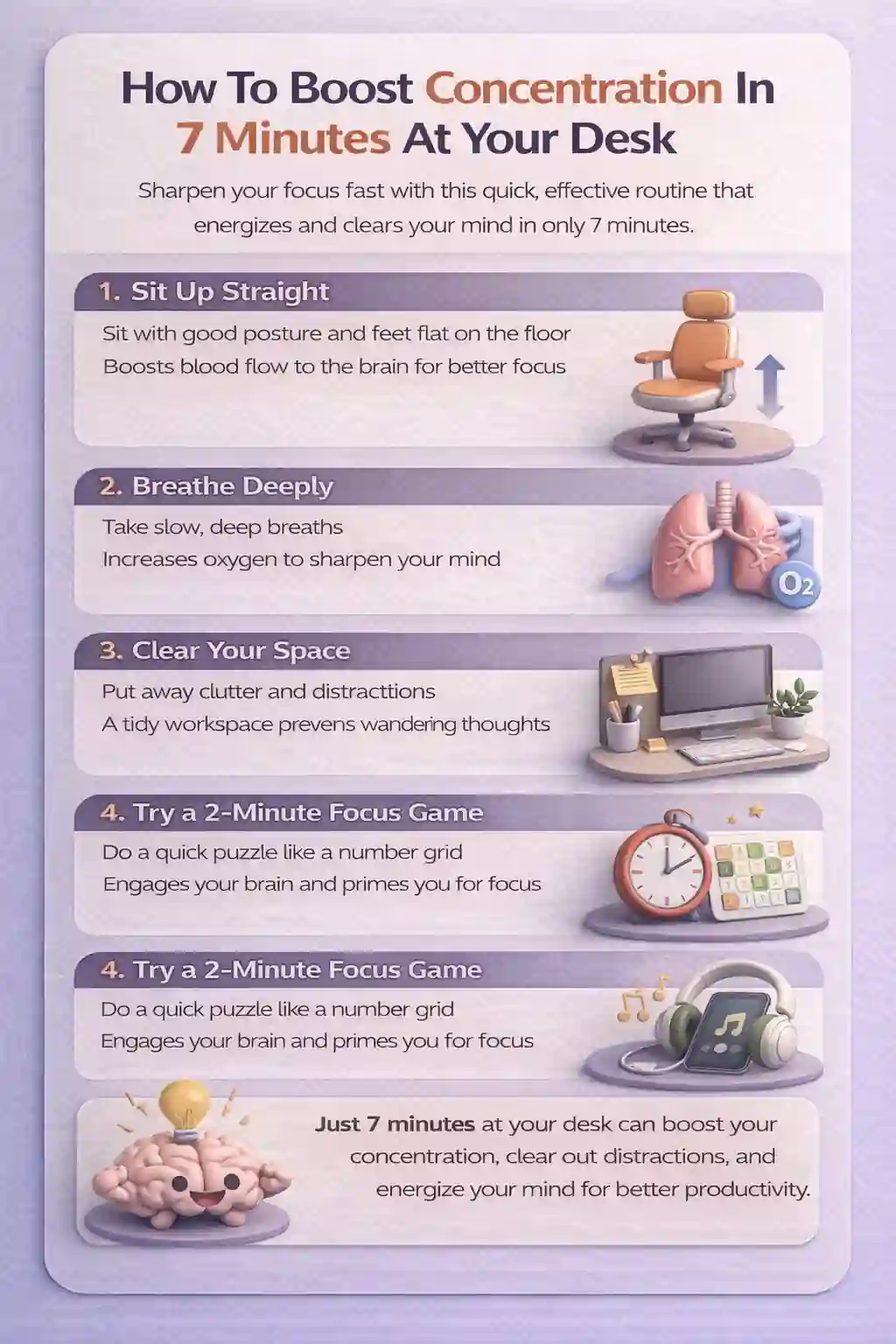
To increase brain power in seven minutes, focus on resetting brain state rather than forcing productivity. Start by calming mental noise with slow, controlled breathing. Then gently re-engage attention using light mental activation—enough to wake focus without overload. Finish by narrowing attention to a single task to stabilize thinking.
Why this works:
Brain power improves fastest when stress is lowered and attention is guided, allowing clarity and focus to return quickly during activities like reading aloud and other mentally demanding tasks.
Top Takeaways
Focus depends on brain state
Stress and mental overload disrupt attention.Seven minutes can restore clarity
Short resets bring concentration back.Calm enables focus
Reducing mental noise improves thinking.More stimulation isn’t the answer
Forcing energy often increases distraction.Focus is a skill you can manage
Knowing how to reset gives you control.
Concentration loss at your desk usually happens quietly. Not because work is too hard—but because attention has been split too many times.
A 7-minute concentration reset works by giving your brain a short, intentional interruption before distraction turns into fatigue. Instead of leaving your desk or forcing productivity, this approach helps the brain re-center while you stay in place.
What this 7-minute reset is designed to do:
Reduce mental noise from constant screen exposure
Re-engage attention without overstimulation
Help your brain lock back onto one task
This method is built for real desk work—not ideal conditions. No apps. No special tools. No stepping away.
Why it works at your desk:
Attention fades before energy does
Short resets restore focus faster than long breaks
Calm, guided re-engagement beats multitasking
The sections below break down:
How to use those seven minutes effectively
What to do (and avoid) while staying at your desk
How to repeat the reset whenever focus drops
Used consistently, this approach helps you work with steadier concentration, fewer distractions, and less mental strain throughout the day, especially for individuals with ADHD.
“In desk-based work, concentration usually fades from fragmentation, not fatigue. In our experience, a short, intentional reset brings focus back faster than stepping away or pushing harder.”
Essential Resources on How to Increase Brain Power in 7 Minutes
The resources below reflect the same principles InfiniteMind applies in real cognitive training: reduce mental overload first, guide attention intentionally, and support focus with methods that work in everyday conditions. Each source adds practical value or authoritative context—without hype or shortcuts.
1. Simple Techniques That Restore Clarity Fast
Five Quick Techniques to Increase Brain Power in 7 Minutes
A concise set of practical actions—like controlled breathing and light mental challenges—that help the brain settle and re-engage quickly when focus drops.
https://wellnessextract.com/blogs/wellness/increase-brain-power-in-7-minutes-5-quick-techniques-you-need-to-try/
2. Short Activities That Improve Alertness Without Overload
Increase Brain Power in 7 Minutes With These Tips
Shows how brief combinations of movement, breathing, and attention cues can wake focus without draining energy—useful during work or study breaks.
https://healthnewsday.com/increase-brain-power-in-7-minutes/
3. Evidence-Backed Exercises for Focus and Memory
Brain Exercises to Boost Memory, Focus & Mental Skills
Provides research-supported exercises that strengthen attention and working memory, reinforcing why short, intentional engagement improves performance.
https://www.healthline.com/health/mental-health/brain-exercises
4. Authoritative Context on How the Brain Works
Brain Health – National Institute on Aging
Offers foundational insight into attention, memory, and cognitive function—helpful for understanding why brain state matters as much as effort.
https://www.nia.nih.gov/health/brain-health
5. Long-Term Brain Health Principles From a Trusted Nonprofit
10 Healthy Habits for Your Brain – Alzheimer’s Association
Connects short focus resets to broader habits that support cognitive health, providing context beyond quick fixes.
https://www.alz.org/help-support/brain_health/10-healthy-habits-for-your-brain
6. Practical Guidance for Keeping the Brain Engaged
Brain Health Resource Center – AARP
Shares research-informed strategies to keep attention and thinking sharp across daily routines, reinforcing consistency over intensity.
https://www.aarp.org/health/brain-health/
7. Expanded Ideas for Brief Mental Activation
14 Brain Booster Tips to Increase Brain Power in 7 Minutes
A broader list of short, usable techniques—such as mindfulness and attention resets—that complement structured routines.
https://level.game/blogs/14-brain-booster-tips-to-increase-brain-power-in-7-minutes
Together, these resources mirror the practical, evidence-based guidance a school consultant might recommend when helping students use short, structured routines to reduce mental overload, restore focus, and increase brain power in just minutes.
Supporting Statistics
Short brain-boost routines work because they target the real conditions most people are working under: stress, sleep loss, and constant mental demand. U.S.-based data supports what we see in practice.
1) Stress and Anxiety Commonly Block Focus
19.1% of U.S. adults experienced an anxiety disorder in the past year
31.1% will experience anxiety in their lifetime
Elevated stress keeps the brain overactivated
Source: National Institute of Mental Health – Anxiety Statistics
2) Sleep Loss Creates Mental Fog
Many U.S. adults get less than 7 hours of sleep
Short sleep reduces attention control
Mental clarity drops before work even begins
Source: CDC – Sleep and Insufficient Sleep Data
3) Chronic Stress Is High in Young Adults
80%+ of adults ages 18–34 report major ongoing stressors
Sustained stress fragments attention
Source: American Psychological Association – Stress in America
What This Confirms in Practice
Focus problems are state-based, not ability-based
Calm restores clarity faster than effort
Short resets outperform forcing concentration
Bottom line:
Brain power improves fastest when stress is lowered and attention is guided—not pushed.
Final Thought & Opinion
Loss of concentration is usually gradual, not sudden.
Stress, short sleep, and constant demands quietly wear focus down.
What We See in Practice
Focus fades from cumulative mental strain
Effort alone rarely fixes it
More stimulation often makes it worse
Why Short Resets Work
They interrupt overload
They restore usable clarity
They guide attention back into place
Our Perspective
Brain power isn’t added—it’s regained
Preparation beats pushing harder
Reliable focus comes from knowing how to reset
Bottom line:
A 7-minute reset isn’t about speed.
It’s about having a dependable way to bring your mind back online.
Next Steps
Use a 7-minute reset when focus drops
Do it before pushing harder or switching tasks.Follow a simple sequence
Calm first. Re-engage attention second.Reduce stimulation during the reset
No multitasking, scrolling, or excess caffeine.Return to one clear task
Work in short, focused blocks.Repeat when needed
Reset again if concentration fades later.Support with recovery habits
Sleep, hydrate, and take regular breaks.
These next steps outline a practical focus-reset strategy often emphasized in private high schools, helping students regain concentration quickly, work in clear short blocks, and maintain mental clarity when attention drops.
FAQ on How to Increase Brain Power in 7 Minutes
Q: Can brain power really improve in 7 minutes?
A: Yes—when the goal is clarity and focus.
Works by resetting brain state
Improves efficiency, not knowledge
Q: What makes the biggest difference in such a short time?
A: Reducing mental overload.
Calm the nervous system first
Activate attention gently
Q: Should the 7 minutes be used to study?
A: No.
Studying increases pressure
Preparation improves recall
Q: Does this help when mentally tired?
A: Often, yes.
Restores usable focus
Not a replacement for sleep
Q: Is this useful beyond studying?
A: Absolutely.
Helps with work tasks
Supports decisions under pressure